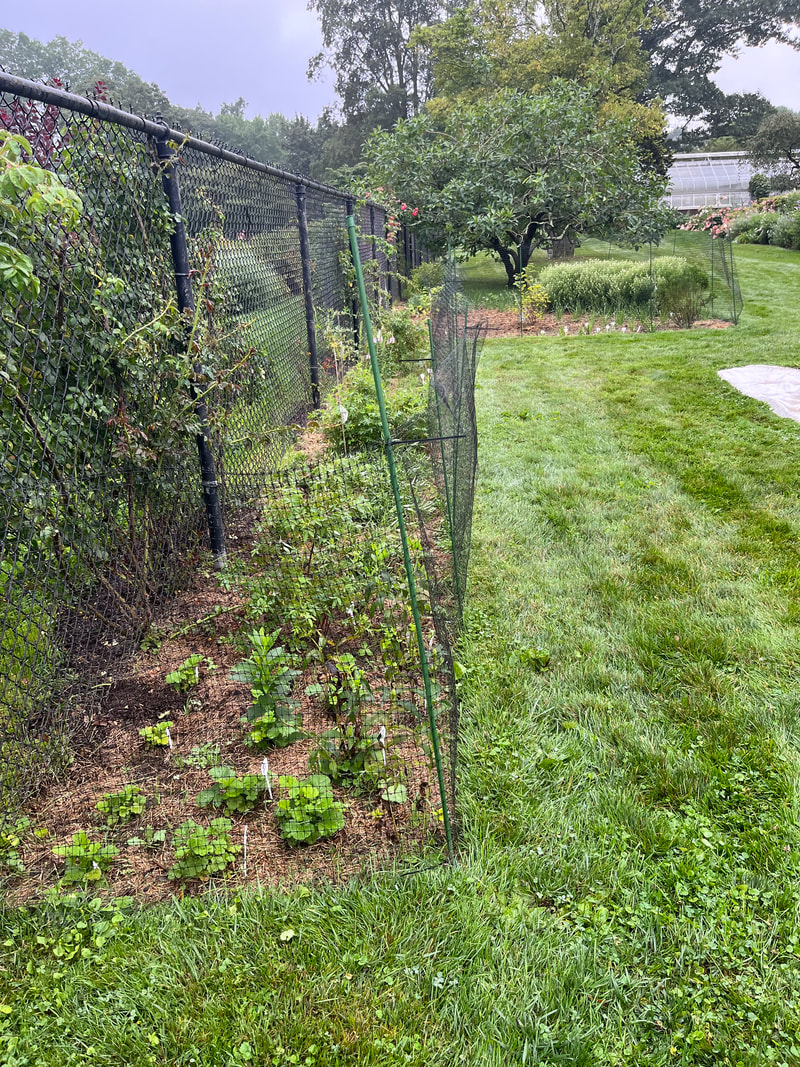
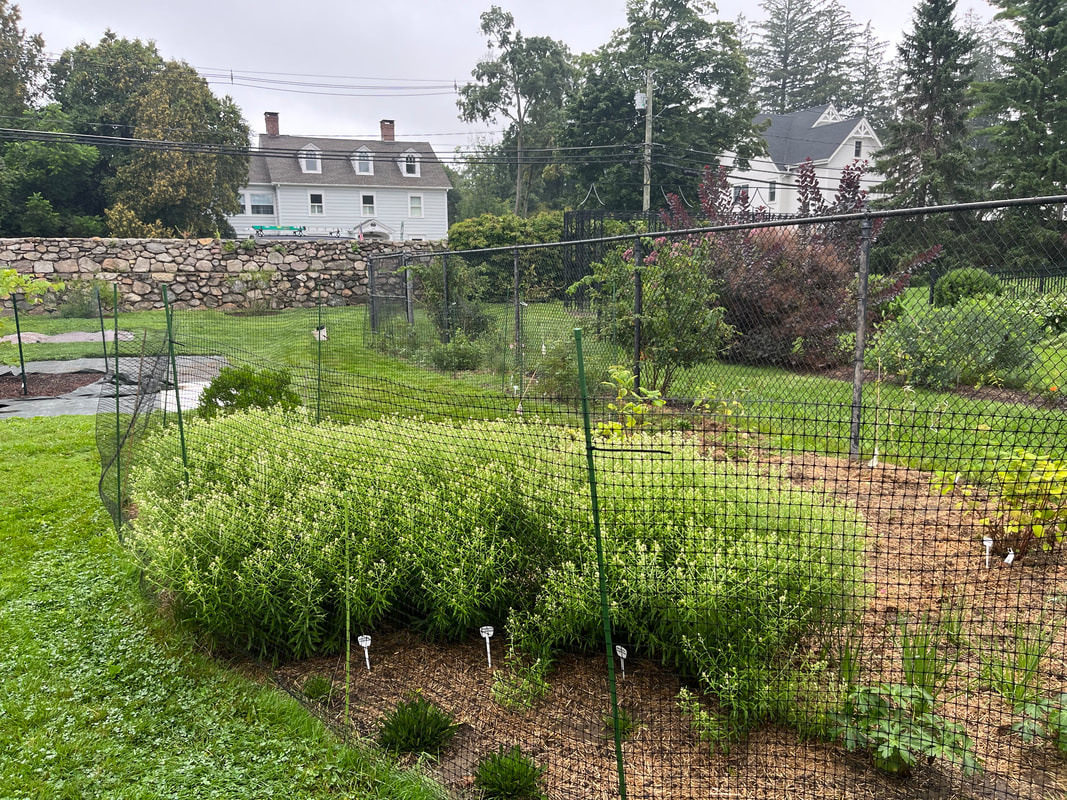
The Ballard Native Plant Garden is the newest of the four gardens funded, planted, and maintained by Ridgefield Garden Club in the northwest corner of Ballard Park. The garden was designed in late 2022 and planted in 2023 and the spring of 2024, replacing turf that had been in place for decades. The garden includes more than 500 native plants of 70 different varieties.
The Ballard Native Plant Garden was created as a demonstration garden to highlight how native plants can work in a formal garden. Many gardeners think of meadow plants, which are tall and aggressive, when they think of natives. There are many native plants, for all growing conditions, that behave more like the ornamental perennials that we all grew up with and love.
Native plants are not only beautiful, but they serve an environmental service to the landscape by providing pollen, nectar and seeds to feed birds, butterflies, moths, bees and other insects. These insects, in turn, will pollinate the plants and eat the insects that are pests.
When designing a native garden, it is important to have plants in bloom from early spring until late fall—both to provide beauty and to feed the birds and insects. It is recommended to follow the “3-3-3” rule—plant at least 3 species of plants, with at least 3 plants of each species, for each of the 3 seasons. There are also a few native species that continue to feed the birds well into the winter months (Wintergreen and Winterberry are examples).
As the study of the relationship between insects and plants has evolved, we have learned more about the specific pollen and nectar needs of those insects. While many of our native insects are “generalists”—taking food from many different plant species, some are “specialists”—requiring specific native plants. The Monarch butterfly is the most well-known specialist, requiring milkweeds to feed on, but many other bee, butterfly and moth species are also specialists. There are many books and websites devoted to these relationships, and it is possible to design your garden around the insects you want to attract. One example of this in our Native Garden is the addition of lupines (Lupinus perennis) —the host plant for the Karner blue butterfly (which has experienced a sharp decline in population). Many pollinator gardens are now focusing specifically on planting the host plants for declining native insect species, with the hope of re- establishing the populations of these important pollinators.
While there is extensive plant knowledge within the membership of the RGC, we felt it would add to the esthetics of the garden to have it professionally designed. Tracey Miller, PLA, ASLA, a Ridgefield resident and former member of the Inland Wetlands Board, agreed to take on the project. We directed her to create a design that would look planned, well kept and appropriately formal for the site. Work began on the site in the fall of 2022 and we hope to have planting completed by the fall of 2025.
The Ballard Native Plant Garden was created as a demonstration garden to highlight how native plants can work in a formal garden. Many gardeners think of meadow plants, which are tall and aggressive, when they think of natives. There are many native plants, for all growing conditions, that behave more like the ornamental perennials that we all grew up with and love.
Native plants are not only beautiful, but they serve an environmental service to the landscape by providing pollen, nectar and seeds to feed birds, butterflies, moths, bees and other insects. These insects, in turn, will pollinate the plants and eat the insects that are pests.
When designing a native garden, it is important to have plants in bloom from early spring until late fall—both to provide beauty and to feed the birds and insects. It is recommended to follow the “3-3-3” rule—plant at least 3 species of plants, with at least 3 plants of each species, for each of the 3 seasons. There are also a few native species that continue to feed the birds well into the winter months (Wintergreen and Winterberry are examples).
As the study of the relationship between insects and plants has evolved, we have learned more about the specific pollen and nectar needs of those insects. While many of our native insects are “generalists”—taking food from many different plant species, some are “specialists”—requiring specific native plants. The Monarch butterfly is the most well-known specialist, requiring milkweeds to feed on, but many other bee, butterfly and moth species are also specialists. There are many books and websites devoted to these relationships, and it is possible to design your garden around the insects you want to attract. One example of this in our Native Garden is the addition of lupines (Lupinus perennis) —the host plant for the Karner blue butterfly (which has experienced a sharp decline in population). Many pollinator gardens are now focusing specifically on planting the host plants for declining native insect species, with the hope of re- establishing the populations of these important pollinators.
While there is extensive plant knowledge within the membership of the RGC, we felt it would add to the esthetics of the garden to have it professionally designed. Tracey Miller, PLA, ASLA, a Ridgefield resident and former member of the Inland Wetlands Board, agreed to take on the project. We directed her to create a design that would look planned, well kept and appropriately formal for the site. Work began on the site in the fall of 2022 and we hope to have planting completed by the fall of 2025.
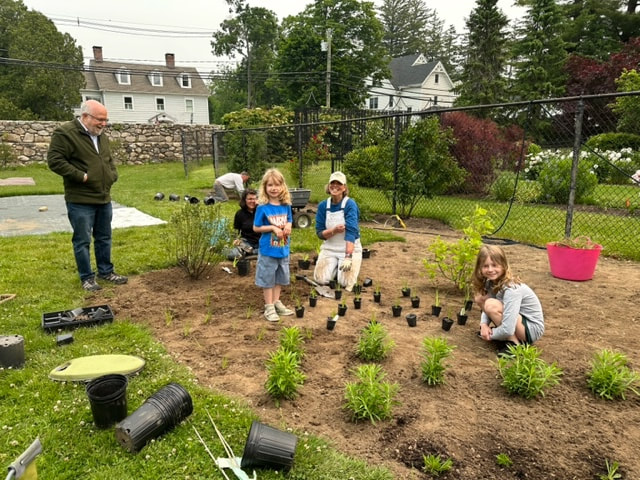
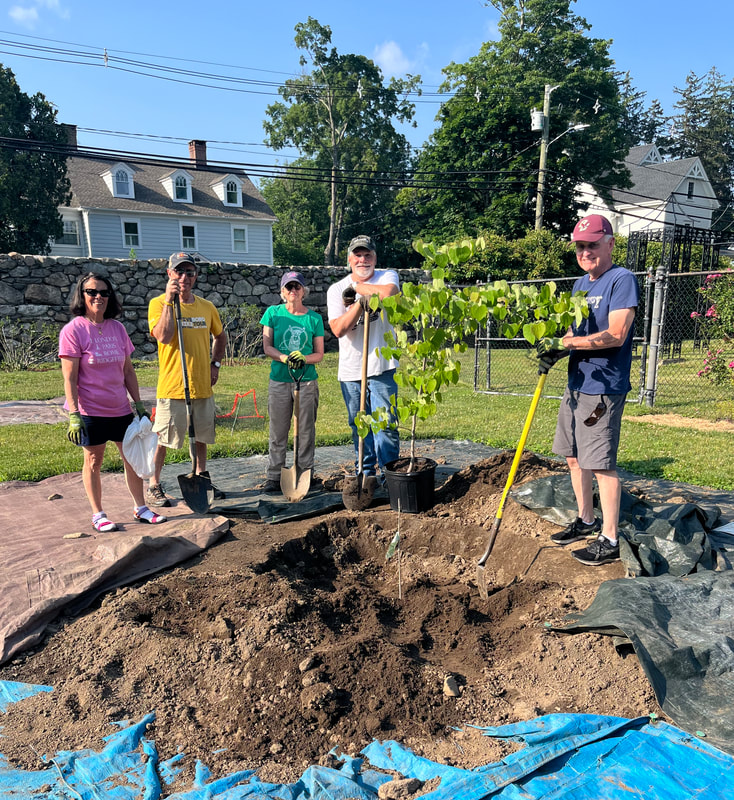
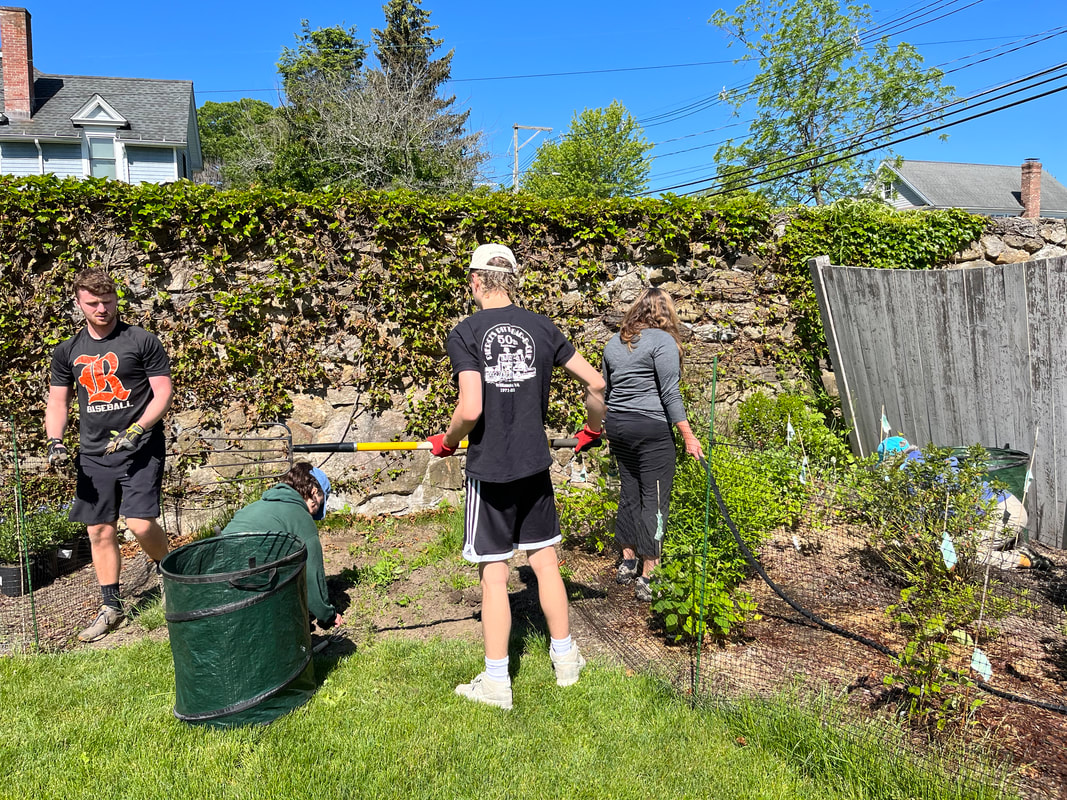
The garden has been planted by Club members, family helpers of all ages, high school interns and Connecticut Master Gardener students.
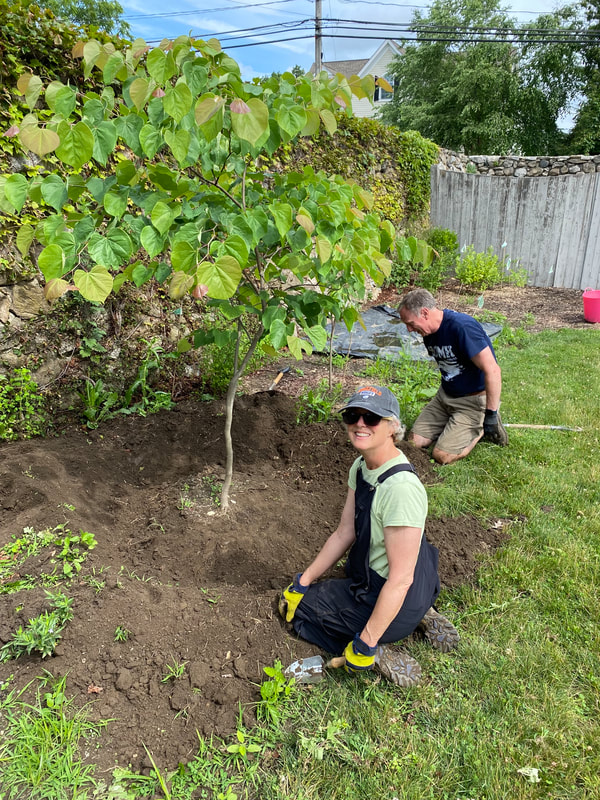
Preparing to plant one of the Cercis canadensis, or Eastern redbuds in the garden.
THE BALLARD NATIVE PLANT GARDEN WAS INSPIRED BY ALICE LEADERMAN
|
Alice Varney Leaderman was born in Springfield Massachusetts and raised in nearby Longmeadow. Her mother, Nina Heard came from Southwest Texas and was descended from genuine cowboys and cattlemen. Her father, Frederick Delano Varney had Mayflower lineage. While still in early grades Alice and her mother shared the hobby of collecting and identifying wildflowers. The annual family vacation at Schoodic Lake in Maine was one place and time for this pastime that Alice recalled as pure and blissful.
Alice went to New York City for college at Barnard. She met her husband of 51 years at nearby Columbia. With him she raised two children while living in the Virginia or Maryland suburbs of Washington D.C. and working as a technical editor. Alice was up-to-date in matters both literary and political; she keenly observed foreign and environmental affairs; earned an MFA in writing, wrote a novella honored by the Penn-Faulkner Society, and did editorial research for non-fiction writers. Alice’s devotion to native gardening began during her years in University Park, Maryland. As the town park near her house became troubled by invasive plants, Alice became absorbed by the complexities, beauties, and purposes of sustainable planting and, perforce, the challenges to control invasives. It became an undertaking that she approached with her usual system and verve. She found out where the experts were and got hands on. She volunteered to do laboratory support at a U.S. Department of Agriculture apiology lab, and then around 2008 began to work with Chesapeake Natives, Inc. (CN), which was led at that time by Dr. Sara Tangren. CN administered significant contracts and grants for the promotion of local flora at the greenhouse and research facilities of the University of Maryland, College Park, and it maintained demonstration gardens on and off campus. From 2012 to 2016 she continued to work with CN at Pope Farm in Montgomery County, Maryland on greenhouse management and distribution of perennial natives throughout Maryland. Before moving from University Park, Maryland Alice steered that town’s Tree and Environment Committee to establish pollinator gardens in the town park. Alice and her husband moved to Ridgefield, Connecticut in 2017. Once the boxes were unpacked, they explored the extensive open spaces and trails the town had developed over the previous 65 years. Soon together they covered almost all of them. |
And at the same time Alice sought out co-workers and co-thinkers to do more of the work that she loved to do. In 2018 Ridgefield Garden Club and the Norwalk River Watershed Authority became part of her habitat. She also built and maintained seed frames for natives at her home.
Working at the Ballard Greenhouse, in the town garden, and on the plant sale had cardinal importance for her in the new community. Alice loved the completeness and order of Ballard’s rich garden; still, she may have loved most to concentrate on the life cycle, cultivation, and peculiarities of individual varieties. Searching out the taxonomies and binomial names was another way to enjoy diversity and to celebrate her tasks. Alice always pursued widely varied interests and managed the regular commotions of giving loving attention to her family, but the work at and around Ballard unfailingly gave her a special time for serenity and sureness of purpose. Alice Leaderman passed away on May 20, 2021. What is it that Alice might wish her friends to have… at the garden? The brilliant mercy of a sure repose, On this present ground, the vividest repose, Things certain sustaining us in certainty. |
THE BALLARD NATIVE PLANT GARDEN WOULD NOT BE POSSIBLE
WITHOUT THE GUIDANCE, GRACE AND GENEROSITY OF THE LEADERMAN FAMILY
WE ARE ALSO GRATEFUL TO:
The Norwalk River Watershed Association and the Connecticut Master Gardener’s Program for providing additional funding.
The Ridgefield Housing Authority for approving the use of the space and maintenance of the grass.
The Ridgefield Garden Club Board and Members for agreeing to take on this project and providing the labor and creativity to make it happen.
The Ridgefield Parks and Recreation Commission and staff for the construction of the beds.
WITHOUT THE GUIDANCE, GRACE AND GENEROSITY OF THE LEADERMAN FAMILY
WE ARE ALSO GRATEFUL TO:
The Norwalk River Watershed Association and the Connecticut Master Gardener’s Program for providing additional funding.
The Ridgefield Housing Authority for approving the use of the space and maintenance of the grass.
The Ridgefield Garden Club Board and Members for agreeing to take on this project and providing the labor and creativity to make it happen.
The Ridgefield Parks and Recreation Commission and staff for the construction of the beds.
The Ridgefield Garden Club